At 415 V and 440 V it still holds 187 kA, and at 690 V it drops to 6 kA, so the voltage you're protecting determines the available fault current it can handle.
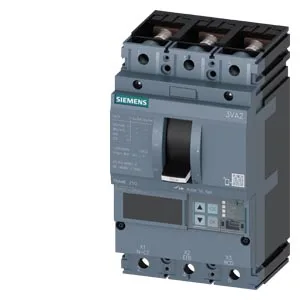
Derate it as the ambient climbs: still 250 A at 50 °C, then 238 A at 55 °C, 225 A at 60 °C, 213 A at 65 °C, and 200 A at 70 °C. The ETU850 electronic trip unit gives you communication and measurement functions — voltage trigger and other measurement functions are built in. That means this breaker can talk to a BMS or PLC about what it's seeing, not just trip. The shunt trip (STL) auxiliary release lets you remotely open the breaker via a control signal, which is handy for emergency stops or sequenced shutdowns. That width matters in a multi-breaker lineup — three of these side by side eat 315 mm of DIN-rail or panel-mount space. The 86 mm depth includes the case body; make sure your gland plate or enclosure door clears it, especially if you're adding the auxiliary switch block or shunt trip wiring.
That's a full complement for status feedback — breaker open/closed, trip event, and electrical alarm. The storage limit governs shipping and warehousing — it'll survive a cold warehouse or a hot truck, but the operating range is what matters in the panel.