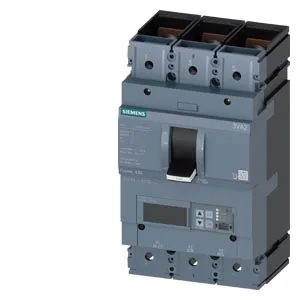
The Siemens SENTRON 3VA2463-6KP32-0CC0 is a 3-pole molded case circuit breaker rated for 630 A continuous at 40 °C, with a thermal derating curve down to 450 A at 70 °C.
The 630 A frame at 40 °C is the thermal benchmark for a main breaker on a 400–500 kVA transformer secondary or a large bus riser. If your panel ambient runs hotter — say, 50 °C inside the enclosure — the breaker derates to 570 A; at 60 °C it drops to 510 A. That derating curve is the first thing to check against your calculated load before committing the BOM line. The 3-pole design, 248 mm height, 138 mm width, and 110 mm depth fit standard SENTRON panel-mounting footprints. The basic switch variant is 3VA2463-6KP32-0AA0; this -0CC0 suffix adds the communication module and UVR. If your panel was wired for a 5SQ2370-2YA05 frame, verify the mounting hole pattern and bus-bar spacing — the SENTRON 3VA series uses a different lug centerline than the older 5SQ generation.
Built-in Accessories and Communication
Two HQ auxiliary switches provide independent status feedback for PLC or SCADA inputs. The communication function (protocol not specified in the base listing) enables remote tripping and energy monitoring without an external shunt trip. Maximum power loss is 164.5 W at rated current — account for this heat in your enclosure ventilation calculation, especially if the breaker is in a sealed cabinet with other heat sources.