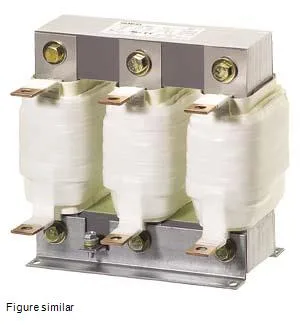
It is rated for a 220 V AC, 50 Hz supply and carries a continuous rated current of 53.6 A, with a maximum of 59.6 A.
The 53.6 A rated current (59.6 A maximum) sizes this reactor for a 220 V drive outputting roughly 18–20 kW to a motor — check your drive's continuous output current to confirm the match. The 0.58 mH inductance per phase, combined with the 7 % impedance, provides enough reactance to limit di/dt during commutation and reduce reflected wave voltage on long motor cable runs. The 189 Hz resonant frequency means this reactor self-resonates well above the 50 Hz fundamental and below typical PWM carrier frequencies (2–16 kHz), so it will not introduce a low-impedance shunt at the switching frequency. The 20 kvar reactive power rating tells you the reactive power the reactor absorbs at rated voltage — useful for power-factor correction planning if the reactor is part of a tuned filter bank. Thermal class H insulation (180 °C continuous) means the reactor can run hot without degrading the winding insulation — relevant if the panel ambient reaches 40 °C (the rated ambient) and the reactor is mounted near other heat sources. The screw-type and flat-connector terminals accept lug or busbar connections typical of panel wiring; no special crimp tool needed beyond standard hydraulic lug crimpers.
At 0.225 m wide, 0.21 m tall, and 0.16 m deep, this reactor occupies roughly the footprint of a standard 9-inch by 8-inch panel area. The flat-connector and screw terminals accept busbar or cable lugs; plan for adequate clearance around the terminals for wrench access. Given class H insulation and a 40 °C ambient rating, derating is not required in a typical ventilated enclosure, but verify airflow if the panel also houses drives that dissipate several hundred watts.