What the ratings mean for fit
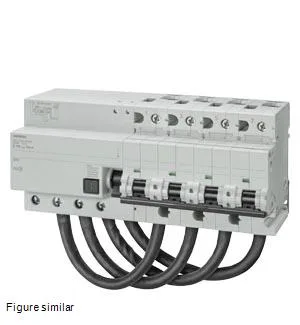
The 198 mm width and 77 mm depth tell you this is an 11-module-wide unit — that's a full-size device, not a slim 2-module RCBO. It needs a distribution board with enough spare ways, or you're rearranging the row. Mounting position is any, and the supply can enter from either top or bottom — that flexibility saves a headache when you're retrofitting into an existing panel where the busbar arrangement is already set. IP20 with the distribution board installed and conductors connected — that's protected against finger contact but not against dust or moisture. Keep it inside a closed panel, not out in the washdown zone. The thermal derating curve is published: 125 A at 30 °C, 115.62 A at 40 °C, 111.25 A at 45 °C, 106.25 A at 50 °C, 101.25 A at 55 °C, and 96.25 A at 60 °C (-). If your panel ambient runs hot — say 50 °C inside the enclosure — you're sizing for 106 A continuous, not 125 A. That's the number that decides whether your 100 A motor feeder holds or trips on a hot afternoon. Class C tripping characteristic means the magnetic trip operates at 5 to 10 times the rated current — a good fit for motor-starting inrush or transformer energization, where a Class B would nuisance-trip and a Class D might not clear a bolted fault fast enough. Overvoltage category III and pollution degree 2 — that's the standard for fixed-installation distribution boards in industrial and commercial buildings. Not for outdoor pole-top mounting, but fine inside the plant's main switchboard.