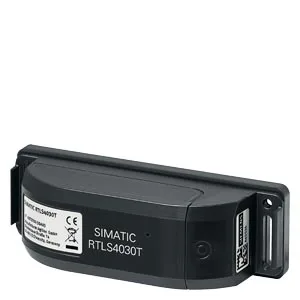
The Siemens 6GT2700-7DC03 is a SIMATIC RTLS Transponder RTLS4084T — a battery-powered UWB (ultra-wideband) asset tag designed for the RTLS4000 real-time locating system using phase technology. It carries a 4.3" ePaper display at 400 x 300 pixels with two two-color LEDs and two function keys, making it readable even in direct sunlight and suitable for visual confirmation of asset identity or status on the factory floor.
Range is listed at 30 m and 50 m maximum in open-air conditions — these are the UWB and 2.4 GHz radio ranges respectively, and the manual must be followed for actual in-plant performance since building materials and metal racking will reduce it. Battery life is the critical operational parameter: 8 years in standby, 18 months with UWB localization on a 1-second cycle, and only 5 months if the ePaper display updates every 10 seconds. That means the display update rate is the dominant power draw — for a tag that mostly sits and reports location, you get years of service; for one that shows changing job data on the screen, expect quarterly battery swaps. The tag uses 4 x AA alkaline or lithium replacement batteries (user-replaceable, backed up by a configuration memory FLASH so settings survive a battery change). IP54 protection means it's dust-protected and splash-resistant — fine for dry indoor logistics and assembly environments, but not for washdown zones or outdoor exposure without additional enclosure. The housing is PC (polycarbonate) in Ti gray, silicon-free, sized at 119 x 97 x 24 mm (W x D x H). Mounting is customer-specific: it ships with a mounting bag and double-sided tape rather than fixed brackets, so you decide whether to screw, strap, or stick it to the asset.
Where this class of part is used
The RTLS4084T belongs to the SIMATIC RTLS4000 family, used for real-time locating of tools, work-in-progress, containers, or mobile equipment inside factories and warehouses. The UWB phase technology gives sub-meter location accuracy, and the ePaper display lets the tag show the last known location or job assignment without needing to scan it. Typical deployment is in automotive assembly, aerospace MRO, or large-scale logistics where knowing where a specific fixture or bin is saves hours of search time per shift.