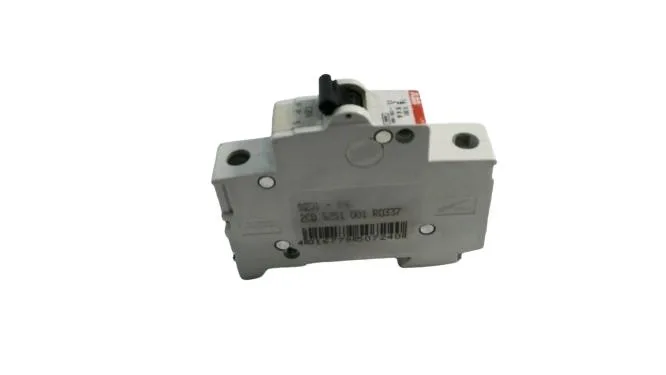
Curve K is a specialty magnetic trip curve designed for highly inductive loads — think motor starters, solenoid valves, or transformer primaries where the inrush current is high but short. The K curve's magnetic trip threshold (typically 8–12× rated current) lets it ride through those inrush spikes without nuisance tripping, unlike a Curve C (5–10×) or Curve D (10–14×) which might trip on a motor start or hold too long on a fault.
Where it's used — the deployment context
This is a DIN-rail mounted supplemental protector per UL 1077, not a branch-circuit rated breaker per UL 489. That distinction matters: UL 1077 devices are intended for overcurrent protection within equipment — control panels, HVAC units, machine tool enclosures — not as the main service disconnect. In a panel, it protects a single 4 A load circuit, typically a contactor coil, a small power supply, or a PLC output group.
Listed under UL 1077 as a supplemental protector and CSA 22.2, the S201-K4 carries the safety certifications needed for North American panel builds. The S200 series also holds IEC/EN 60898 and IEC/EN 60947-2 ratings for global installations, though the specific listing here is UL/CSA. RoHS and REACH compliance documentation is available from the manufacturer upon request — standard for ABB's current-production S200 line.