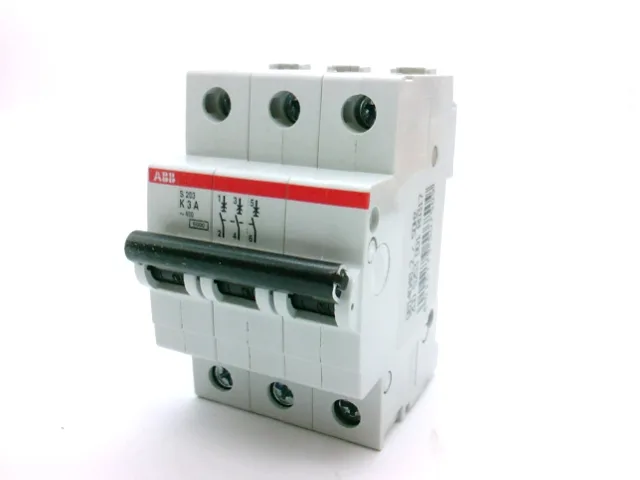
The K-curve is designed for inductive loads with high inrush currents — think motor starters, solenoid valves, or transformer primaries — where a B- or C-curve would nuisance-trip on startup.
Three-pole construction means it protects a three-phase load or three independent single-phase circuits off the same DIN rail. At 277 VAC phase-to-neutral, it's common in North American lighting panels where the line-to-neutral voltage is 277 V. The K-curve's magnetic trip threshold — typically 10–14x rated current — handles the inrush of small motor loads or lighting ballasts without dropping out on startup. For a maintenance tech swapping out a failed S203-C8 in the same panel: the footprint and DIN-rail mount are identical, but the trip curve is different — C-curve trips at 5–10x In, K-curve at 10–14x In — so verify the load's inrush profile before substituting.