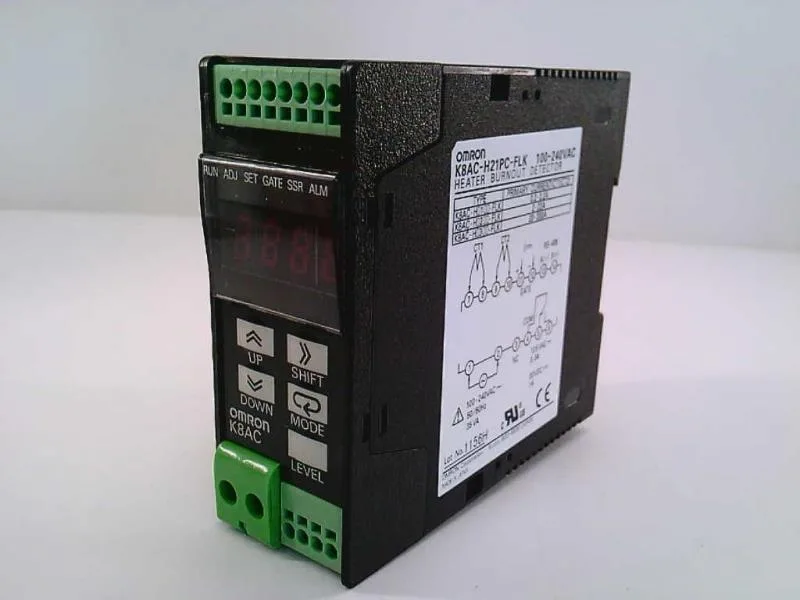
What the K8AC-H21PC-FLK Detects and Why It Matters
The K8AC-H21PC-FLK is a dedicated heater element detector, not a general-purpose temperature controller. Its input range of 0.20 ~ 2.20 A means it monitors the current draw of a heater load to detect open elements or partial failures before the process drifts. The relay output triggers on fault — wire it into the safety chain or a PLC alarm input. The 4-digit red LED shows the actual current reading, not just a pass/fail flag, which helps during commissioning to confirm the heater load matches the nameplate.
Power Supply and Mounting — Panel Fit
Wide-range universal supply: 85 ~ 264 VAC, so it runs on any standard line voltage from 100 V to 240 V without a transformer tap change. That saves a panel re-spin if the site voltage differs from the design assumption. Mounts on DIN rail — snaps onto the standard 35 mm rail alongside the contactors and power supplies. The spring-cage terminals (push-in style) accept solid or ferruled stranded wire; no screwdriver needed for the power or signal connections. Operating range is -10 °C to 55 °C, which covers most indoor panel environments. If the panel sits in direct sun or next to a furnace, budget for derating above 55 °C ambient.
RS-485 CompoWay/F — Integration Note
The RS-485 port uses Omron's CompoWay/F protocol, which is a master-slave serial bus. The K8AC-H21PC-FLK acts as a slave device; the PLC or SCADA polls it to read the measured current and fault status. Baud rate and node address are set via the front-panel buttons or software — no DIP switches. On a multi-drop line, each K8AC-H21PC-FLK needs a unique address. The 4-character LED displays the address during setup, which helps during commissioning when you are verifying which unit is which on the bus.