Curve C means it holds through 5–10× rated current momentarily, so it tolerates the start-up surge of a few fluorescent ballasts or a small pump without nuisance tripping, but clears a hard short fast. That's the standard rating for most commercial distribution boards — it matches the typical available fault current downstream of a 100 A service entrance. If your panel SCCR study calls for higher, this isn't the breaker.
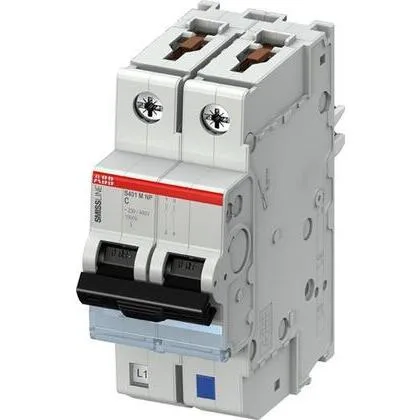
ABB S401M-C20NP S400 MCB, 1P 20A Curve C, 10kA
MPNS401M-C20NP
ABB S400 SMISSLN MCB, S401M-C20NP, 1-pole 20 A Trip Curve C, 240 VAC, 10 kA interrupting capacity, DIN rail mount.
Sourced new & surplus through independent channelsAuthenticity-screened · ESD-safe packingListing updated Jul 2026
Specifications
| Parameter | Value |
|---|---|
| Amps | 20 |
| Type | Trip Curve C |
| Poles | 1 |
| Mounting | DIN Rail |
| Volts AC | 240 |
| Family (Style) | S400 |
| Breaking capacity | 10 kA |
Product details
Frequently asked questions
What is the interrupting rating of S401M-C20NP?
10 kA at 240 VAC. That's the maximum fault current the breaker can safely interrupt without damage.
What does Trip Curve C mean on this breaker?
Curve C trips between 5× and 10× rated current (100–200 A for this 20 A unit). It's designed for general-purpose loads with moderate inrush — lighting banks, small transformers, control circuits — where a B curve would nuisance-trip on start-up but a D curve would let a sustained overload run too long.
Will S401M-C20NP drop into a panel specified around S201MUC-K2?
Mechanically yes — both are 1-pole DIN-rail breakers with the same 35 mm rail footprint. But the electrical specs differ: S401M-C20NP is 20 A Curve C at 240 VAC with 10 kA interrupt, while S201MUC-K2 is 2 A Curve K at 277 VAC with 6 kA AC interrupt. You cannot swap them without rewiring and recalculating the branch-circuit protection.
Where can I buy S401M-C20NP?
Sourced and quoted to order against an RFQ through independent distribution. Availability and current pricing are confirmed at quote time — no stock count or lead-time figure is published here.
MPN
S401M-C20NP