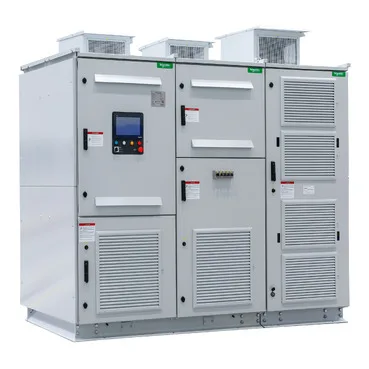
Medium-voltage drive architecture for large motor loads
The ATV6000D280A2424ND is a floor-standing AC drive from the Altivar Process ATV6000 range, designed for synchronous, asynchronous, and permanent magnet motors up to 220 kW in normal duty or 180 kW in heavy duty. A 54-pulse diode rectifier bridge on the input side keeps total harmonic current distortion below 3% per IEEE 519-1992, which means the drive typically meets utility harmonic limits without an external filter — a key consideration for site electrical engineers planning the transformer and switchgear coordination. The drive ships with the power cells, phase-shifting transformer, cooling fans, HMI, and enclosure included — essentially a pre-integrated drive cabinet that lands ready for line and motor connections.
Line current and apparent power ratings
Line current is 54.0 A in heavy-duty configuration and 78.0 A in normal-duty configuration, with apparent power rated at 280 kVA and a power factor of 0.96. Output voltage matches the supply voltage; the drive accepts a 50 Hz supply with ±5% tolerance and includes integrated EMC filters for both control (Category C3) and power (Category C4) per IEC 61800-3.
Control interfaces and fieldbus options
The control block provides two RJ45 ports for Ethernet IP/Modbus TCP and one RJ45 for Modbus serial, plus slots A and B for communication or I/O option cards supporting Profibus DP V1, PROFINET, DeviceNet, CANopen, and EtherCAT. Eight programmable digital inputs (24 V DC, two configurable as pulse inputs up to 30 kHz) and configurable analogue inputs (0–10 V or 0–20 mA, 12-bit) give the controls integrator flexibility for encoder feedback, setpoint, and enable signals without extra interface modules. The 10-inch LCD touch screen HMI provides multi-language local control and monitoring — useful for commissioning and fault diagnosis without a laptop.
Regulatory approvals include CULus, CE, and UKCA, covering installation in North American, European, and UK markets. Standards compliance spans IEC 61800-3, IEC 61800-5-1, IEEE 519, and UL 347A.