Torque and ratio — the real selection numbers
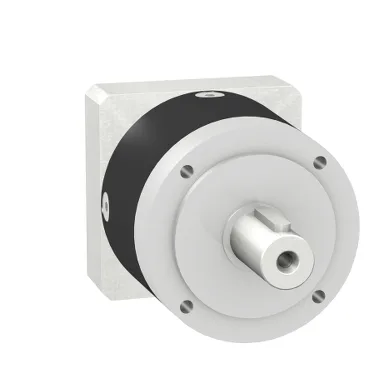
The GBX0400120401D: This is a 40 mm-diameter planetary gearbox with a 12:1 reduction ratio and straight-cut teeth. The continuous output torque is 20 N.m, with a maximum intermittent torque of 32 N.m — the difference is the margin for acceleration peaks and short overloads. For a continuous-duty application, size the load to stay under the 20 N.m figure; the 32 N.m ceiling covers starting and emergency stops. Efficiency is listed at 94 %, which is typical for a single-stage planetary of this ratio. That figure already accounts for the gear mesh and bearing losses at rated load — the input power required is the output power divided by 0.94, plus a small margin for the no-load spin loss.
Mechanical limits — radial and axial forces, service life
The output shaft carries a maximum radial force of 200 N and a maximum axial force of 200 N, both rated at 100 rpm for a 10,000-hour life at 30 °C. If you need the full 30,000-hour service life, those force limits drop to 160 N each — the bearing L10 life is the constraint, not the gear teeth. The torsional rigidity is 1.1 N.m/arcmin, which matters when the load has a resonant frequency near the drive train's natural frequency. The housing is black anodized aluminium, shaft material is C45 steel. The shaft output seal carries an IP54 rating — splash-proof, not submersible. Mounting position is unrestricted, and the gearbox is lubricated for life, so no maintenance schedule for oil changes.
Noise and backlash — fit for precision indexing
Maximum torsional backlash is 35 arc.min. That is a standard-precision grade — fine for conveyor drives and general positioning, but not for a servo axis that reverses direction under load. Noise level is 55 dB at 1 m, no-load, which is quiet enough for an indoor machine enclosure without acoustic treatment.