Sizing the 8:1 reduction for the load
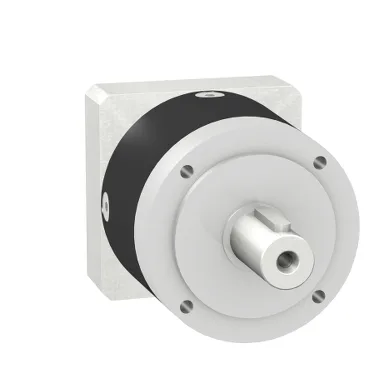
The GBX0600080582D: The 8:1 reduction ratio transforms input speed to output torque — at 100 rpm input, the continuous output torque is 18 N.m, with a maximum peak of 29 N.m for transient loads. The 96% efficiency means only 4% of input power is lost as heat, so the gearbox runs cool enough that no external cooling is needed in most servo-driven indexing or conveyor applications. Service life is rated 30000 hours at 100 rpm and 30 °C — at higher speeds or ambient temperatures above 30 °C, the life derates. The lubricated-for-life design eliminates oil-change intervals, which simplifies maintenance on long-running production lines.
Mechanical limits that govern the fit
The 60 mm external diameter and black anodized aluminium housing with C 45 steel shaft define the mounting envelope. Maximum axial force on the output shaft is 450 N at 100 rpm for the 30000-hour life target, or 600 N if the application accepts a 10000-hour service life. Radial force limits are 340 N and 500 N respectively, measured at mid-distance from the output shaft. Exceeding these loads shortens bearing life faster than the torque rating would suggest. Torsional rigidity is 2.3 N.m/arcmin and maximum backlash is 20 arcmin — the straight-tooth design trades some positioning accuracy for lower cost compared to helical gears. For indexing applications that need better than 20 arcmin repeatability, a helical or low-backlash planetary would be the right choice.
Sourcing an obsolete GBX gearbox
Schneider Electric lists the GBX0600080582D as obsolete. For a line-down replacement, the mounting dimensions (60 mm diameter, any mounting position) and the 8:1 ratio are the critical fit parameters. The 20 arcmin backlash and straight-tooth design mean this is not a precision-indexing gearbox — if the original application needed tighter positioning, the replacement should match the original backlash spec, not just the ratio.