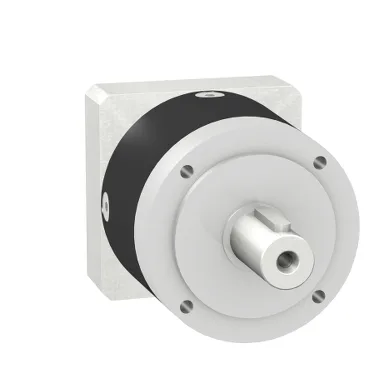
Torque and reduction — what the numbers mean for the load
The GBX0600121403F is a 60 mm-diameter planetary gearbox with a 12:1 reduction ratio, delivering 44 N.m continuous output torque at 100 rpm and 30 °C ambient. That continuous rating is the figure to size against the driven load's running torque — the 70 N.m maximum output torque (at the same speed and temperature) covers intermittent peaks like acceleration or momentary overloads, not sustained duty. Efficiency is listed at 94 %, which means about 6 % of input power is lost as heat inside the gearbox. For a motor driving this gearbox at, say, 500 W input, the heat rejection is roughly 30 W — negligible in free air but worth considering if the gearbox is enclosed or mounted near temperature-sensitive components.
Mechanical limits — shaft loads and service life
The output shaft is C 45 steel and carries defined overhung load limits: maximum axial force Fa is 450 N for a 30,000-hour life at 100 rpm, or 600 N if you accept a shorter 10,000-hour life. Radial force Fr at mid-shaft is 340 N for the longer life, 500 N for the shorter. These are the limits for belt-pulley or chain-sprocket loads applied to the shaft — exceeding them shortens bearing life faster than the torque rating would suggest. Torsional rigidity is 2.5 N.m/arcmin — a measure of how much the output shaft twists under load. For positioning applications, the 20 arcmin maximum torsional backlash is the angular play between input and output when direction reverses; this matters for indexing or servo-driven axes where repeatability is critical.
Lifecycle reality — obsolete, sourced to order
Schneider Electric lists the GBX0600121403F as obsolete. The gearbox is lubricated for life and sealed to IP54 at the shaft output — the seal protects the bearing from dust and splash, but the housing itself is not rated for washdown. Ambient operating range is -25 to 90 °C, which covers most indoor industrial environments.