Torque ratings that govern the sizing decision
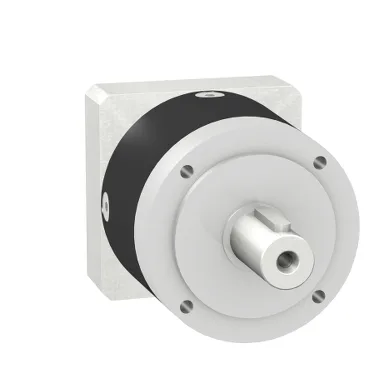
The GBX0800080553F: Continuous output torque is 50 N.m at 100 rpm and 30 °C ambient — this is the sustained load the gearbox can transmit without exceeding the thermal or mechanical design limits. The maximum output torque reaches 80 N.m under the same conditions, covering intermittent overloads such as acceleration peaks or momentary jams. The 94 % efficiency figure means roughly 6 % of the input power is lost as heat inside the housing. For a 50 N.m continuous load at 100 rpm (about 524 W input), the heat dissipation is roughly 31 W — well within the capacity of the anodized aluminium housing in free air at 30 °C. Service life is rated at 30,000 hours at 100 rpm and 30 °C — about 3.4 years of continuous operation. The gearbox is lubricated for life, so no maintenance oil changes are needed within that window.
Mechanical interface and loading limits
The output shaft is C45 steel, and the housing is black anodized aluminium with an external diameter of 80 mm. The shaft output seal carries an IP54 rating — splash protection from the shaft side, but the gearbox body itself is not sealed to the same level; mounting orientation and drip exposure matter. Maximum axial force on the output shaft is 1200 N for a 10,000-hour life at 100 rpm and 30 °C, derating to 900 N for the full 30,000-hour service life. Maximum radial force is 650 N at mid-shaft for 30,000 hours, or 950 N for 10,000 hours — these limits govern belt-tension or overhung-load applications. Torsional rigidity is 6 N.m/arcmin, and maximum torsional backlash is 9 arcmin. For indexing or positioning applications, the 9 arcmin backlash means a reversal of load direction introduces up to 0.15° of lost motion at the output — acceptable for many conveyor and material-handling axes but not for precision servo positioning without compensation.
Environmental envelope and acoustic profile
Ambient temperature range for operation is -25 °C to 90 °C, covering most indoor industrial environments and some outdoor cabinet applications. Noise level is 60 dB at 1 m under no-load conditions — roughly the level of a quiet office conversation, which suits noise-sensitive production areas. The straight-tooth gear geometry is inherently noisier than helical gearing at higher speeds, but the 60 dB figure at no-load suggests the 8:1 reduction keeps pitch-line velocities moderate. Under load, expect a modest increase in acoustic emission.