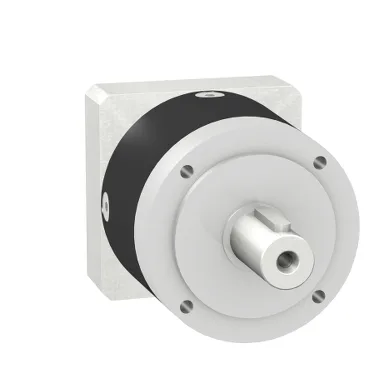
Torque ratings and what they mean for the driven load
The GBX1200160703F: The continuous output torque is 260 N.m at 100 rpm and 30 °C — this is the thermal limit the gearbox can sustain without exceeding the 30,000-hour service life target. The maximum output torque of 416 N.m at the same speed and temperature is the peak the gear train can transmit before the straight-cut teeth risk fatigue damage; it is not a continuous rating. A 16:1 reduction ratio means the input speed is sixteen times the output speed, with the torque multiplication following the ratio minus efficiency losses. At 94 % efficiency, about 6 % of the input power turns into heat inside the housing.
Load capacity and shaft limits
The output shaft carries a maximum radial force of 1500 N applied at mid-span, and a maximum axial force of 2100 N — both rated at 100 rpm for the full 30,000-hour life. If the application cycles faster or the load point shifts, those figures derate. The shaft material is C45 steel, standard for this torque class. Torsional rigidity is 13 N.m per arcmin of wind-up, and maximum backlash is 12 arcmin — the cumulative angular play between input and output when the direction reverses. For positioning axes that reverse load, this backlash figure is the one to check against the system's repeatability budget.
Lifecycle reality — obsolete, sourced through independent channels
Schneider Electric lists the GBX1200160703F as obsolete. The gearbox is available through independent surplus and broker channels; quantities are confirmed at RFQ and are lot-specific. The gearbox is lubricated for life — no maintenance oil changes. The black anodized aluminium housing carries an IP54 rating at the shaft output, meaning it resists dust ingress and splashing water but is not sealed against hose-down or immersion. Ambient operating range is -25 °C to 90 °C.