Planetary reduction at 20:1 — what the torque numbers mean
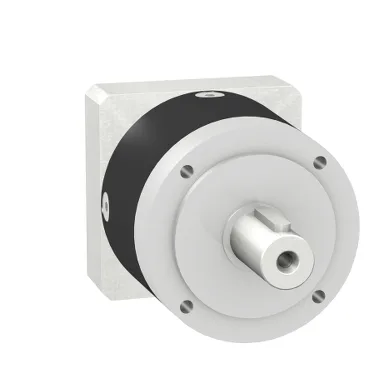
The GBX1200200554F: This is a straight-tooth planetary gearbox with a 20:1 reduction ratio and a 120 mm housing diameter. The continuous output torque is 260 N.m at 100 rpm (86 °F), with a maximum intermittent torque of 416 N.m at the same speed — so the gearbox can handle short overloads roughly 60 % above its continuous rating without damage. Torsional rigidity is 13 N.m/arcmin, meaning each arc-minute of windup under load requires 13 N.m of torque — a useful number if you're sizing this into a servo-driven indexing table where positioning repeatability matters. The maximum torsional backlash is 12 arc.min, so expect about 0.2° of lost motion at the output before the load engages.
Sourcing an obsolete gearbox
Schneider Electric lists this part as obsolete. The gearbox is sourced through independent surplus and broker channels; quantities are confirmed at RFQ and are lot-specific. For a line-down situation, the 94 % efficiency and 30,000-hour service life at rated load (100 rpm, 30 °C) mean a used unit with documented run hours may still have substantial remaining life. The shaft output seal is rated IP54 — splash-resistant but not submersible. The housing is black anodized aluminium, and the shaft material is C45 steel. Lubrication is sealed for life, so no maintenance schedule for grease changes.
Axial and radial load limits — don't overshoot the overhung load
Maximum axial force (Fa) is 2100 N at 100 rpm for the full 30,000-hour life, or 2800 N if you accept a 10,000-hour life. Radial force (Fr) applied at mid-span on the output shaft is 1500 N for 30,000 hours or 2000 N for 10,000 hours. If your application pushes past these numbers, the bearing life drops faster than the derating curve suggests — budget a replacement interval.