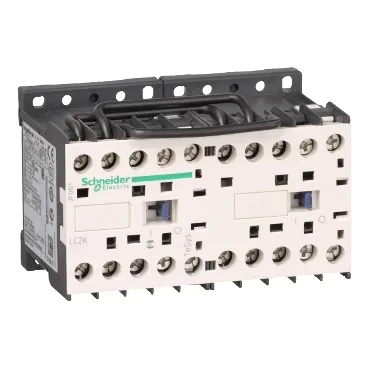
What it is and what it does
The Schneider Electric LC2K1610Q7 is a TeSys K reversing contactor — a 3-pole, preassembled unit with the reversing power busbar already integrated, so it saves panel space and wiring time compared to building a reversing pair from two separate contactors plus a mechanical interlock. Rated for AC-3 duty at 16 A up to 440 V, it handles reversing motor loads such as conveyors, hoists, and door actuators where the direction change is frequent. The coil is wound for 380-400 V AC, so it's a direct fit on 400 V three-phase panels common across European and Asian industrial sites.
Key ratings and what they mean for fit
The AC-3 rating of 16 A at ≤440 V is the motor-switching current — it's the figure that governs whether this contactor can start and stop a 3-phase induction motor under load. For a 400 V system, that translates to roughly 7.5 kW motor capacity. The 690 V AC rated operational voltage on the power circuit means the contactor can also switch resistive or lightly inductive loads at higher line voltages, but the AC-3 motor rating is the one that matters for the reversing duty it's built for. IP20 finger protection (per VDE 0106) is standard for enclosed panel mounting — no special shrouding needed inside the cabinet, but it's not rated for washdown or outdoor exposure. Operating altitude up to 2000 m without derating covers most installations; above that, the air dielectric and cooling degrade, so the contactor would need to be down-rated or replaced with a higher-spec unit.
Sourcing and lifecycle reality
Schneider has marked the LC2K1610Q7 as obsolete, so it's no longer in active factory production. For a BOM line that calls out this exact order code, the practical sourcing path is through surplus or broker channels — we can quote it to order against an RFQ, but there is no official Schneider successor part number to cross-reference. If you're designing a new panel or stocking spares, the closest active alternative in the TeSys range would be a reversing contactor from the TeSys D series, but the form factor, busbar arrangement, and coil voltage need to be verified against the existing footprint — it's not a pin-for-pin drop-in.