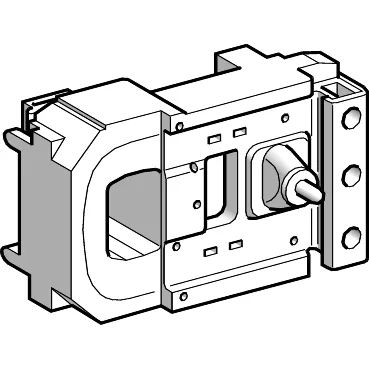
The LX0FK020 is a replacement contactor coil from the Schneider Electric TeSys F range, rated for 208 V AC (50-400 Hz) or 208 V DC control circuits. It's the drop-in service part for TeSys F contactors that use this coil platform — when the original coil opens or the line-side contactor needs a swap, this is the direct fit. The control circuit voltage limits are tight: latching and unlatching both hold at 0.85 to 1.1 times the rated Uc, so the supply needs to stay within 177 to 229 V for reliable pick-up and drop-out. That matters on a line where voltage sag is common — at 208 V nominal, a 15% dip takes it below the minimum and the coil won't latch. Operating time runs 50 to 100 ms for unlatching and 40 to 80 ms for latching. For a coil this size, that's standard — the latching side is faster because it's pulling the armature in against spring pressure, while unlatching lets the spring push it back. If your application needs faster break than 50 ms, this coil isn't the right choice.
Ratings that matter on the bench
Mechanical durability is rated at 1 million cycles — that's the contactor frame life, not the coil's electrical endurance under load. The coil itself will last that long thermally if the control voltage stays clean and the duty cycle stays under 120 cycles per hour at 40 °C ambient. Push it harder and the coil temperature climbs, which accelerates insulation aging on the winding. Average resistance is 23.6 ohms for the latching winding and 2981 ohms for the unlatching winding at 20 °C. That's a two-winding coil — the low-resistance latching winding pulls the armature in, then the high-resistance unlatching winding holds it or releases it depending on the contactor design. If you're troubleshooting a coil that won't pick, check the latching winding resistance first; an open there means no pull-in force. The control circuit accepts AC from 50 to 400 Hz or DC standard — that covers 50/60 Hz mains and any DC rail in a panel. No special derating needed between AC and DC at this voltage level because the coil impedance handles both.