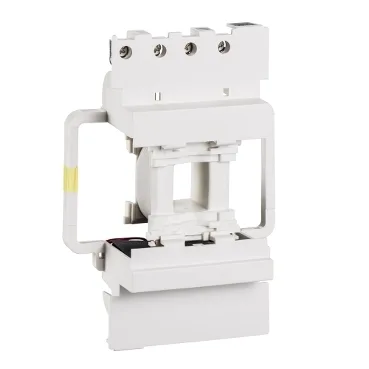
Schneider Electric LX1D8K7 — Contactor & Starter Coils

Schneider LX1D8K7 TeSys Contactor Coil, 100-110 VAC

MPNLX1D8K7
Obsolete

Schneider Electric TeSys Deca contactor coil LX1D8K7, 100-110 V AC 50/60 Hz, 300 VA inrush, 22 VA hold, obsolete.

Source DocumentedChannel stated on listing & quote
Condition PhotosReal unit photos / video on request
WhatsApp AnswersFast human replies for machine-down parts
Worldwide DispatchDHL/FedEx — transit quoted per order
Independent China distributor & sourcing agent· Listing updated Sep 2026

Specifications

LX1D8K7 — Identification
ParameterValue
Product typeContactor coil
Product rangeTeSys
Device short nameLX1D8
Coil technologyWithout built-in suppressor module
LX1D8K7 — Electrical
ParameterValue
Control circuit voltage [Uc]100...110 V AC 50/60 Hz
Control circuit voltage limitsDrop-out: 0.3...0.6 Uc at 50 Hz (at Operational: 0.85...1.1 Uc at 50 Hz (at <55 °C)
Coil resistance (avg.)1.24 Ohm at 20 °C
Coil inductance (closed circuit)0.09 H
LX1D8K7 — Power & Thermal
ParameterValue
Inrush power (VA)300 VA 50 Hz cos phi 0.8 (at 20 °C)
Hold-in power (VA)22 VA 50 Hz cos phi 0.3 (at 20 °C)
Heat dissipation3...8 W at 50 Hz
LX1D8K7 — Performance & Durability
ParameterValue
Max. operating rate2400 cyc/h 60 °C
Mechanical durability8 Mcycles
LX1D8K7 — Environmental
ParameterValue
Operating temperature-5...60 °C

Product details

The LX1D8K7 is a replacement contactor coil in the TeSys Deca range, designed to fit the LX1D8 contactor frame. It is a bare coil without a built-in suppressor module, so any RC snubber or varistor must be added externally across the coil terminals if the application requires EMI suppression or inductive-load protection for the driving PLC output. Rated for 100-110 V AC at 50/60 Hz, it draws 300 VA inrush at 50 Hz (cos φ 0.8) and settles to 22 VA hold-in power (cos φ 0.3). That 13:1 ratio between pick-up and sealed power means the control transformer must be sized for the inrush peak, not the hold-in steady state — a 100 VA transformer will drop its output voltage momentarily if the coil shares a circuit with other loads.

Lifecycle reality and sourcing posture

If you are validating a new design or a replacement for an existing panel, the coil's mechanical durability of 8 Mcycles and maximum operating rate of 2400 cycles/hour at 60 °C give a solid baseline for expected service life, but the obsolete status means you should evaluate a form-fit-function equivalent from the current TeSys range before committing to a long-term spares plan.

Electrical characteristics that govern fit

The coil's average resistance is 1.24 Ω at 20 °C, and its closed-circuit inductance is 0.09 H. These values matter for sizing the control transformer and for calculating the back-EMV if you add an external suppressor — a standard RC snubber across the coil will see that inductance as the load. Drop-out voltage is 0.3 to 0.6 Uc at 50 Hz; operational range is 0.85 to 1.1 Uc at 50 Hz below 55 °C. In practice, if your control supply sags below about 85 V AC, the coil may not pick up reliably, and it will drop out below about 55 V AC. Heat dissipation runs 3 to 8 W at 50 Hz depending on the coil state. In a densely packed panel with multiple contactors running continuously, that heat adds up — allow adequate ventilation or derating if ambient inside the enclosure approaches 60 °C.

Frequently asked questions

What is the control voltage for this coil?

100-110 V AC at 50/60 Hz. The inrush power is 300 VA at 50 Hz (cos φ 0.8), and the hold-in power is 22 VA at 50 Hz (cos φ 0.3).

Does this coil include a built-in suppressor?

No. The coil technology is listed as 'Without built-in suppressor module'. An external RC snubber or varistor must be added if suppression is required.

How do I source the LX1D8K7 given its obsolete status?

Through the surplus and broker channel. We can quote to order against an RFQ — availability and lead time vary per request, as this is not a stocked production item.

MPN
LX1D8K7