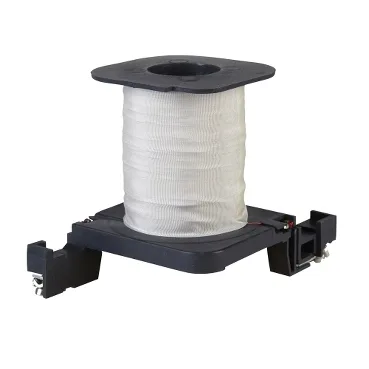
The LX4D7QD is a replacement contactor coil from the TeSys Deca range, designed for a 80 A contactor. It operates on a 174 V DC control circuit, drawing 22 W inrush and hold-in power at 68 °F (20 °C). The coil is a DC standard type without a built-in suppressor module, meaning you will need to add external suppression (a free-wheeling diode or RC snubber) across the coil terminals to protect the control circuit from inductive kickback when de-energizing. Its average resistance is 1394 Ohm at 68 °F (20 °C), and it has a time constant of 75 ms. The control voltage limits are a drop-out range of 0.1...0.3 Uc and an operational range of 0.85...1.1 Uc at temperatures below 131 °F (55 °C).
Given the obsolete status, the supply posture is last-time-buy or surplus/broker channel — do not count on it for a new design or a long-term production run. If you need a drop-in replacement, the sourcing path is to verify the coil's mounting footprint and electrical ratings against a current-production TeSys coil with the same 174 V DC control voltage.
The 174 V DC control voltage is specific — it is not a common 24 V DC or 110 V DC coil. Verify your control circuit voltage matches this exactly; a 24 V DC coil will not pull in, and a 230 V DC coil will burn out the winding. For high-speed applications like a packaging line running at 60 cycles per minute, this coil will last well over a year of continuous operation before mechanical wear becomes a concern. The ambient air temperature range for operation is 23...140 °F (-5...60 °C). If the coil is mounted inside a hot panel near a power supply or other heat sources, ensure the ambient stays below 140 °F to avoid derating or premature failure.
Deployment context
This coil mounts into a TeSys Deca contactor — it is a direct replacement for the coil in an 80 A contactor frame. No DIN-rail or panel-mount changes are needed; it clips into the contactor's coil housing. Because the coil lacks a built-in suppressor, plan for an external diode or RC network across the coil terminals. This is standard practice for DC coils in a control panel to prevent voltage spikes from damaging PLC outputs or relay contacts.