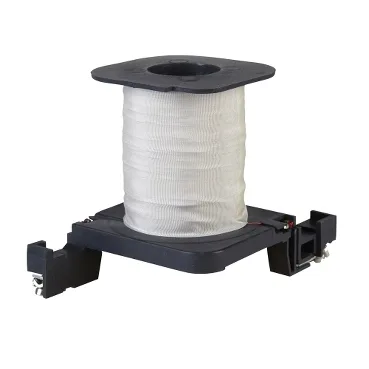
Schneider Electric LX4D7WD — Contactor & Starter Coils

Schneider Electric LX4D7WD TeSys Contactor Coil, 543 V DC, O

MPNLX4D7WD
Obsolete

Schneider Electric TeSys Deca contactor coil, LX4D7WD, 543 V DC standard, for 80 A contactor.

Source DocumentedChannel stated on listing & quote
Condition PhotosReal unit photos / video on request
WhatsApp AnswersFast human replies for machine-down parts
Worldwide DispatchDHL/FedEx — transit quoted per order
Independent China distributor & sourcing agent· Listing updated Sep 2026

Specifications

LX4D7WD — Identification
ParameterValue
Product typeContactor coil
Product rangeTeSys
Device short nameLX4D7
Coil technologyWithout built-in suppressor module
LX4D7WD — Electrical
ParameterValue
Control circuit voltage [Uc]543 V DC
Control circuit typeDC standard
Control circuit voltage limitsDrop-out: 0.1...0.3 Uc (at Operational: 0.85...1.1 Uc (at <131 °F (55 °C))
Coil resistance (avg.)14058 Ohm 68 °F (20 °C)
Time constant75 ms
LX4D7WD — Power & Thermal
ParameterValue
Inrush power (W)22 W 68 °F (20 °C))
Hold-in power (W)22 W 68 °F (20 °C)
LX4D7WD — Performance & Durability
ParameterValue
Max. operating rate3600 cyc/h 140 °F (60 °C)
Mechanical durability10 Mcycles
LX4D7WD — Environmental
ParameterValue
Operating temperature23...140 °F (-5...60 °C)

Product details

The LX4D7WD is a DC-operated contactor coil from the Schneider Electric TeSys Deca range, designed as the replacement coil for a 80 A TeSys contactor frame. It is a dedicated control-circuit component — not a standalone contactor — and it carries a 543 V DC control circuit voltage, which means it is sized for high-voltage DC control schemes typical in industrial switchgear where a separate DC supply powers the coil bus. The coil draws 22 W inrush and 22 W hold-in power at 20 °C, with an average resistance of 14058 Ω. Its control circuit is DC standard without a built-in suppressor module, so the panel builder must add a free-wheeling diode or varistor across the coil terminals to suppress the inductive kickback when de-energizing — standard practice for DC coils driving PLC or relay outputs.

Because the coil is obsolete, the integrator or MRO planner should verify that the existing contactor frame (80 A TeSys Deca) is still serviceable with an alternative coil voltage if a 543 V DC supply is not available. The drop-out voltage range is 0.1 to 0.3 Uc and the operational range is 0.85 to 1.1 Uc at 55 °C, so a replacement coil must match these limits for reliable pick-up and drop-out.

The coil mounts directly onto the TeSys Deca contactor base — no special tooling required. The time constant of 75 ms governs the coil's magnetic build-up, which means the contactor's main poles close approximately 75 ms after the control voltage is applied. This delay is short enough for most sequencing logic but should be accounted for in timing-sensitive interlock circuits. Operating ambient temperature range is -5 to 60 °C (23 to 140 °F). The coil's hold-in power is continuous-rated at 22 W, so the enclosure must dissipate that heat when the contactor is held in for extended periods — factor it into the panel's thermal budget, especially in sealed cabinets with multiple contactors.

Frequently asked questions

What is the control voltage for this coil?

The control circuit voltage is 543 V DC, with a drop-out range of 0.1 to 0.3 Uc and an operational range of 0.85 to 1.1 Uc at 55 °C.

What contactor does this coil fit?

It is designed for the TeSys Deca range 80 A contactor frame. It is a replacement coil, not a standalone contactor.

Does the coil include a built-in suppressor?

No. The coil technology is listed as without built-in suppressor module. An external free-wheeling diode or varistor must be added across the coil terminals for inductive kickback suppression.

MPN
LX4D7WD