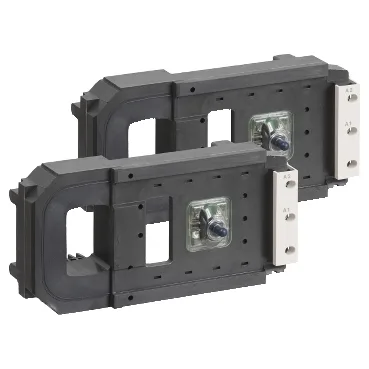
The LX4FX180 is a TeSys FX series contactor coil from Schneider Electric, designed as a replacement or build-up coil for FX-frame contactors in the TeSys range. It operates on a 180 V DC control circuit, with the coil rated for low-consumption DC control. Opening time runs 100...130 ms, closing time 70...80 ms — these are the mechanical response windows you factor into your control sequence timing, especially if you're coordinating interlocks or safety circuits that expect the contactor to drop out within a known window. The coil ships without a built-in suppressor module. That means you need to add external flyback suppression (a diode or RC snubber across the coil) if your control circuit drives it from a DC source — otherwise the inductive kick when the coil de-energizes can take out a PLC output or relay contact. Standard practice: a 1N4007 or equivalent across the coil, cathode to positive.
Control voltage and operating limits
The coil is rated for 180 V DC nominal (Uc). The operational voltage window is 0.85...1.1 Uc at 131 °F (55 °C), so the coil must see between 153 V and 198 V DC to pull in reliably under load at elevated panel temperature. Drop-out occurs between 0.2...0.4 Uc (36...72 V DC) at the same temperature — meaning once the coil is energized, the contactor stays sealed until the control voltage drops below about 36 V, which gives you a decent hold-in margin against brownout conditions. Ambient operating temperature range is 23...131 °F (-5...55 °C). If your panel runs hotter than that — near a furnace line or in a sun-baked enclosure — you'll need to check the thermal derating or relocate the coil.
Integration note
The coil mounts directly onto the FX contactor armature — no adapter plate or wiring harness modification required if you're replacing a failed coil in an existing TeSys FX assembly. Verify the coil voltage matches your control circuit before fitting; a 180 V DC coil on a 24 V DC circuit won't pull in, and a 24 V coil on 180 V will smoke immediately. Single-unit packaging, so order one per contactor you're servicing. No special handling or storage requirements beyond keeping it dry and within the rated temperature range.