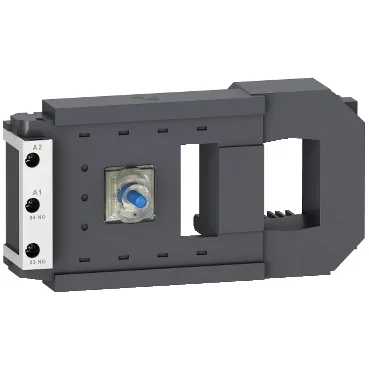
The LX9FG070 is a specific contactor coil from the Schneider Electric TeSys F range, designed for F-frame contactors. It operates on a 70 V AC control circuit at 40 to 400 Hz, with low-consumption hold-in power draw of 8.9 to 10.9 VA. This is the replacement coil for a TeSys F contactor that has lost its coil or needs a different control voltage — not a standalone contactor, but the magnetic actuator that pulls the main poles in. The 70 V AC coil sits in the middle of the TeSys F coil voltage range, and the 40 to 400 Hz frequency tolerance means it works on both 50 Hz and 60 Hz supply without derating. Opening time is 130 ms, closing time 35 ms — the slower opening is inherent to AC coil decay without a suppressor module. The coil has no built-in suppressor, so if the contactor drives an inductive load, plan an external RC snubber or varistor across the coil terminals to protect the control circuit from the back-EMF spike on dropout.
Lifecycle reality — obsolete, source to order
The LX9FG070 is marked obsolete by Schneider Electric. That means it is no longer manufactured or stocked by the factory. For a maintenance spares buyer with a TeSys F contactor in the field that needs a 70 V AC coil, this part is still available through independent surplus and broker channels — but only on a quoted-to-order basis against an RFQ.
The inrush power is 950 to 1180 VA at 68 °F (20 °C) — that is the instantaneous draw when the coil first pulls in, which determines the sizing of the control transformer and the fuse or circuit breaker feeding it. The holding power drops to 8.9 to 10.9 VA once the contactor seals, so the steady-state load on the control circuit is light. Coil resistance is 4.44 ohms inrush and 141.7 ohms holding at 20 °C, which confirms the large impedance shift between pickup and sealed states typical of AC-operated contactors. The control voltage limits are 0.85 to 1.1 Uc for operation at 131 °F (55 °C), meaning the coil must see at least 59.5 V AC to pull in reliably and no more than 77 V AC to avoid overheating. Drop-out occurs between 0.35 and 0.55 Uc (24.5 to 38.5 V AC), which gives a reasonable margin against nuisance dropout on a sagging control bus. Heat dissipation is 8 to 9.8 W, which must be considered when grouping multiple contactors in a sealed enclosure — that heat adds up and can raise the internal ambient above the rated 131 °F (55 °C) operating limit. The ambient temperature range for operation is -5 to 55 °C, so the coil is not suited for outdoor enclosures in freezing climates without supplemental heating.