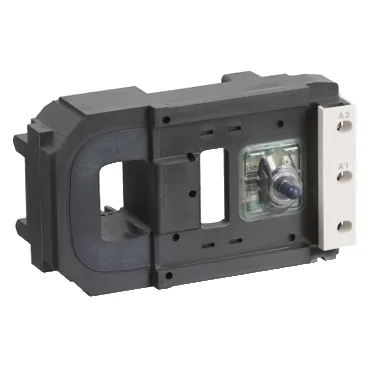
Schneider Electric LX9FJ920 — Contactor & Starter Coils

TeSys LX9FJ920 Contactor Coil, 57-62 VDC / 63-70 VAC, Obsole

MPNLX9FJ920
Obsolete

Schneider Electric TeSys F series, specific contactor coil LX9FJ920, 57...62 V DC / 63...70 V AC 40...400 Hz, 60 ms opening / 20 ms closing, without built-in suppressor module.

Sourced new & surplus through independent channelsAuthenticity-screened · ESD-safe packingListing updated Jul 2026

Specifications

LX9FJ920 — Identification
ParameterValue
Product typeSpecific contactor coil
Product rangeTeSys
Device short nameLX9FJ
Coil technologyWithout built-in suppressor module
LX9FJ920 — Electrical
ParameterValue
Control circuit voltage [Uc]57...62 V DC 63...70 V AC 40...400 Hz
Control circuit typeAC 40...400 Hz low consumption DC low consumption
Control circuit voltage limitsOperational 0.85...1.1 Uc 131 °F (55 °C)) Drop-out 0.3...0.5 Uc 131 °F (55 °C))
LX9FJ920 — Power & Thermal
ParameterValue
Inrush power (VA)500 VA 40...400 Hz (at 68 °F (20 °C))
Hold-in power (VA)23 VA 40...400 Hz (at 68 °F (20 °C))
Heat dissipation11.4...13.9 W
LX9FJ920 — Performance & Durability
ParameterValue
Operating time60 ms opening 20 ms closing
Max. operating rate3600 cyc/h 158 °F (70 °C)
Mechanical durability10 Mcycles
LX9FJ920 — Environmental
ParameterValue
Operating temperature23...131 °F (-5...55 °C)

Product details

The LX9FJ920 is a specific contactor coil from the TeSys F range, designed to replace or populate the coil assembly on TeSys F frame contactors. It accepts a dual control voltage — 57...62 V DC or 63...70 V AC at 40...400 Hz — which covers both DC-switched panels and AC control circuits without needing a separate coil variant. Opening time is 60 ms, closing time 20 ms, which is typical for this frame size and means the contactor responds fast enough for motor starting and general switching but not for high-speed synchronous transfer applications. The coil draws 500 VA inrush at 20 °C and holds at 23 VA, so the control transformer must be sized for the inrush peak. There is no built-in suppressor module on this coil — the coil technology is listed as 'without built-in suppressor module'. That means you must add an external RC snubber or varistor across the coil terminals if driving it from a PLC output or solid-state relay, otherwise the inductive kickback can damage the driver or cause noise on the control bus.

For a coil that cycles every few seconds in a high-speed pick-and-place line, that translates to roughly 3,000 hours of continuous operation before mechanical wear is a concern. Maximum operating rate is 3600 cycles per hour at 70 °C — that is one cycle per second, which is fast for a contactor coil. The heat dissipation of 11.4 to 13.9 W must be considered if the coil is enclosed in a small junction box without airflow; derating or forced ventilation may be needed at sustained high rates. The coil's control voltage limits are 0.85 to 1.1 Uc for operation and 0.3 to 0.5 Uc for dropout — so on a 60 V DC bus, it stays pulled in down to about 51 V and drops out between 18 and 30 V.

Frequently asked questions

What is the closest alternative to the LX9FJ920?

No official successor order code is published in the lifecycle record. A functionally similar coil from the TeSys F range would need to match the 57-62 V DC / 63-70 V AC control voltage and the physical mounting pattern of the F-frame contactor. Because the coil lacks a built-in suppressor, any replacement must also account for external snubber integration. We can search our multi-source inventory for the closest parametric match when you submit an RFQ.

What is the TeSys range for this coil?

The LX9FJ920 belongs to the TeSys F range, which is Schneider Electric's line of heavy-duty contactors and associated accessories for motor switching and power distribution.

What compliance documentation is available for the LX9FJ920?

The evidence does not list specific compliance certifications (RoHS, REACH, UL, IEC) for this order code. As a TeSys F component originally manufactured by Schneider Electric, it would have been designed to meet applicable IEC and UL standards at the time of production, but current compliance documentation for an obsolete part may not be available from the manufacturer.

MPN
LX9FJ920