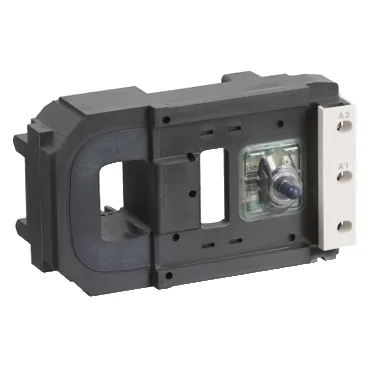
Opening time is 60 ms, closing time is 20 ms. Those are the mechanical response times once the coil is energized or de-energized — not the full contactor break time, but the coil's contribution to it. For a fast-opening safety circuit, the 60 ms opening is the number to check against your stop-time calculation. That's the life of the coil itself before mechanical wear is expected — not the contactor's electrical life under load. In a high-cycle application like a pick-and-place or packaging machine running 3600 cycles per hour at 70 °C, that's about 2800 hours of continuous operation before the coil is due. Heat dissipation runs 11.4 to 13.9 W. That's the heat the coil dumps into the panel when held in. Inrush power is 500 VA at 20 °C, holding at 23 VA. The inrush spike is what the control transformer or PLC output must handle for the 20 ms closing period. The hold-in power is what the supply sees continuously. If you're driving this from a PLC relay output, check the output's VA rating against the 500 VA inrush — many solid-state outputs can't take that surge without a buffer relay.
Installation note — suppressor required
This coil is supplied without a built-in suppressor module. That means the installer must add an external RC snubber or varistor across the coil terminals — especially on AC control circuits — to limit voltage spikes when the coil drops out. Without it, the inductive kick can damage nearby PLC outputs, relays, or the contactor's own auxiliary contacts. Standard practice is a 24-ohm / 0.1 µF RC suppressor for AC, or a free-wheel diode for DC circuits.
The dual-voltage capability and active status make it a straightforward drop-in for any TeSys F contactor needing a coil replacement — no cross-reference needed, no alternate part to chase.