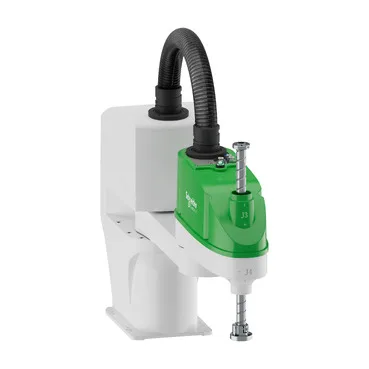
Environmental envelope and cabinet integration
The LXMRSP0660200: The arm runs from 0…40 °C ambient, transports and stores at -20…60 °C, and ships with an IP20 base that becomes IP65 once the conformity kit is fitted — that is the deciding factor for food-grade or washdown cells, where the kit closes out the joints and cable exits rather than the arm itself (cite:, cite:, cite:, cite:). ESD tolerance is 4 kV and fast-transient immunity is 2 kV on the control wiring, so routing signal and power cabling on separate DIN troughs with standard EMC practice is sufficient for the cabinet side without exotic filtering (cite:, cite:). Noise floor is 70 dB under nominal cycle, which usually drops inside a sound enclosure anyway — a relevant figure when the cell sits adjacent to a manual workstation and the EHS audit wants a number on paper (cite:).
Sourcing and lifecycle posture
Schneider Electric lists this order code as an active product, so the project buyer can plan normal delivery to the install date with project spares held for startup rather than a last-time-buy window (cite:). The arm is sold and specified as a single unit per package, with the conformity kit ordered separately when the IP65 washdown rating is required — a small but procurement-real point, because that kit ships under a different code and lands on a different RFQ line (cite:). For BOM freeze on a capex package, the order code itself locks the workspace, payload, and reach envelope; any change to the reach or the inertia ceiling is a different order code in the Lexium SCARA family rather than a parameter retune of this one.