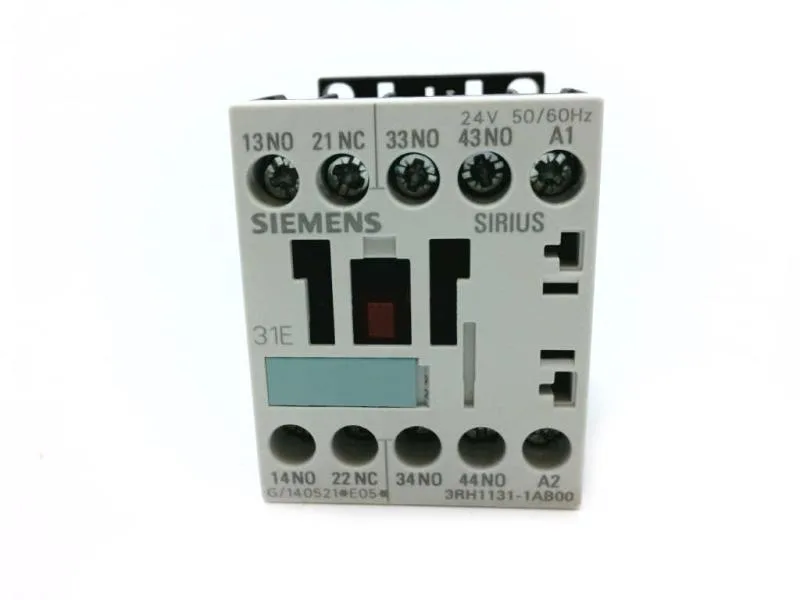
It carries 3 normally open and 1 normally closed instantaneous contacts, rated 10 A in AC-12 duty (resistive loads at 24 V). That AC-12 rating means it handles control-circuit loads like PLC inputs, indicator lamps, and small solenoid valves without derating — the full 10 A is available across the contact set.
The AC-12 maximum operating current of 10 A is the headline number, but the switching capacity varies with voltage: 6 A at 230 V, 3 A at 400 V, and 1 A at 690 V. That voltage-dependent curve matters — if you're switching a 400 V control transformer, the 3 A limit governs, not the 10 A. For DC loads, the 24 V rated value is 10 A, but at 110 V it drops to 1 A, and at 220 V to 0.27 A. Let me show you why that matters: spec the contactor for the worst-case switching voltage, not the 24 V peak. That flexibility is handy when you're squeezing auxiliary contacts into a crowded panel section. Shock resistance is 10g for 5 ms and 5g for 10 ms — fine for industrial machinery but not rated for heavy repetitive impact. Altitude limit is 2 000 m; above that, dielectric strength and cooling both derate.
Wiring and integration notes
The screw-type terminals are standard for panel building — strip length around 8-10 mm, torque to the manufacturer spec. The 0 mm side clearance requirement means you can butt it against adjacent devices without derating, which saves DIN rail space.