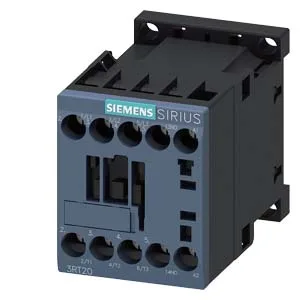
Its DC coil, rated at 24-34 V, pulls in with an inrush peak of 2.3 A and holds steady, making it a fit for 24 VDC control buses common in refrigeration and process skids.
The contactor's DC switching capability is given at several voltage points: 10 A at 24 V, 2 A at 48 V, 2 A at 60 V, 1 A at 110 V, and 0.9 A at 125 V. These are the maximum continuous currents the main contacts can break in DC circuits at those voltages—critical for sizing the contactor to a DC motor brake, solenoid valve bank, or resistive heater load. For AC motor loads, the 230 V rating is 2 hp, which tells you it can start and stop a small pump or fan motor on a 230 V single-phase line. The contactor carries a mechanical life of 30 million operations typical, and an AC-4 switching rate of 250 operations per hour maximum. AC-4 is the heaviest duty—plugging and inching of motors—so that 250 1/h figure is the thermal limit for the arc chute and contacts under frequent reversals. For a refrigeration compressor that cycles a few times an hour, this contactor runs cold and stays cold. Arcing time is 10-15 ms, and the DC dropout time (coil release) is 25-45 ms. The dropout spread matters for sequencing: if you have two contactors interlocked for reversing, you need that 25 ms minimum to ensure one opens before the other closes, preventing a phase-to-phase short.
That 6 mm side clearance is tight—you can butt contactors side-by-side on the rail if the panel builder leaves that gap for airflow and wiring access. This helps when the contactor sits in a swing-panel or an overhead cabinet where the rail is not perfectly vertical.
That -40 °C low end makes it suitable for cold storage and freezer applications where the panel might see sub-zero temperatures during a shutdown or in an unheated space.