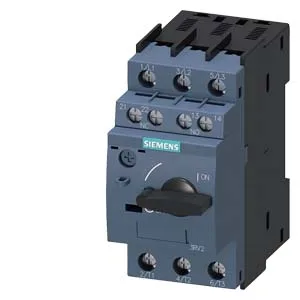
It carries a 100 kA breaking capacity at 400 V and 500 V, and 4 kA at 690 V, so it handles high fault currents on a 400 V distribution bus without cascading upstream. Auxiliary contact ratings span 1 A at 24 V down to 0.15 A at 60 V, covering PLC input or contactor coil circuits.
The 100 kA SCCR at 400 V (and 500 V) means it safely interrupts a bolted fault at that level; at 690 V the breaking capacity drops to 4 kA, so verify the available fault current if the circuit runs at 690 V. The 20–690 V rated operating range covers low-voltage motor control panels globally. Maximum switching frequency is 15 operations per hour in AC-3 duty (motor starting), which suits conveyor, pump, and fan cycles but not rapid jogging or reversing service.
The 45 mm width (3 module spaces) matches standard enclosure fill-factor calculations. Main contact terminals accept 2× (0.5 to 1.5 mm²) solid or stranded, or 2× (0.75 to 2.5 mm²) with ferrules; screw terminals are M3. Clearance to adjacent devices: 50 mm upward and downward, 30 mm to the side. No ground fault detection built in, so downstream RCD or separate ground-fault module is needed for personnel protection.