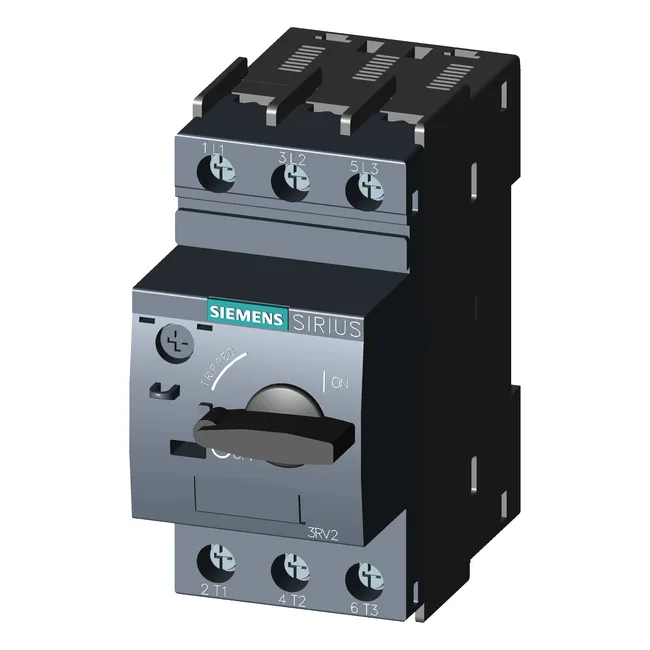
Short-circuit and overload ratings
The interrupting capacity varies with line voltage: 100 kA at 240 V and 400 V, 42 kA at 500 V, and 4 kA at 690 V — enough for most industrial service entrances. The continuous current rating is 8 A at both 480 V and 600 V, so it protects a motor drawing up to 8 A full-load. For fuse backup coordination, the maximum gL/gG fuse rating at 400 V is 50 A, at 500 V is 40 A, and at 690 V is 35 A. This lets you size upstream fuses to match the breaker's let-through without over-fusing. The rated insulation voltage spans 20 to 690 V, covering standard low-voltage motor circuits.
Thermal environment and cycling
The CLASS 10 trip curve holds within this band; no derating note is given, but mounting in a sealed enclosure above 40 °C may shift the thermal response — verify with the thermal curve if the panel runs hot. Maximum switching rate at AC-3 duty (motor starting) is 15 operations per hour, matching the AC-3e rating — sufficient for most pump and fan cycling, but not for high-repetition jogging or reversing service.