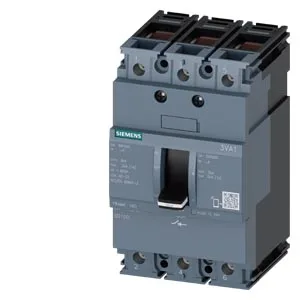
What it does NOT have: overload protection, short-circuit protection, or undervoltage release. This is a pure disconnect with a remote-trip coil, sized for the 3VA1 IEC frame 160. Rated insulation voltage is 800 V (Ui), and the maximum operational voltage is 690 V AC 50/60 Hz or 500 V DC. That shunt trip coil is wound for 110–127 V DC or AC 50/60 Hz — verify your control voltage matches before wiring.
The 100 A continuous rating is the maximum uninterrupted current the disconnect can carry without exceeding its thermal limits. Mechanical endurance is 15 000 operating cycles. That's the number of open-close operations the mechanism is rated for before wear-out. For a switch disconnector used as a manual service disconnect cycled a few times a year, that's effectively lifetime; for a frequently switched load, it's a maintenance interval. The IP40 front protection means the front face is protected against tools and small wires (1 mm diameter), but the part is not sealed against moisture — install in a clean, dry enclosure or one with a higher overall IP rating.
Auxiliary contacts and trip signaling
That gives you three separate signal paths: two for status feedback (open/closed) and one dedicated to indicating a shunt-trip event. The trip alarm switch changes state only when the disconnect is opened by the shunt trip or a manual trip mechanism, not by normal switching — useful for remote fault annunciation.