The Siemens 3VA1110-6MH32-0JA0 is a 3VA1 IEC frame 160 molded-case circuit breaker rated for 100 A continuous current with a breaking capacity class H of 70 kA at 415 V AC — that 70 kA Icu means it can safely interrupt a short-circuit fault of that magnitude without welding its contacts or rupturing the case, which is the figure that governs upstream breaker coordination and panel SCCR compliance. It is a 3-pole unit fitted with a TM120M thermal-magnetic trip — the thermal element provides overload protection for motor circuits, while the magnetic element handles short-circuits with an adjustable instantaneous trip range of 5 to 15 times the rated current (Ii = 5...15 x In), so you can dial in the magnetic pickup to coordinate with downstream loads without nuisance tripping on inrush. The part includes a shunt trip (STL) rated for 110-127 V DC or AC 50/60 Hz — that is a remote-trip coil that lets a safety PLC or emergency-stop circuit kill the breaker from a distance, which is standard for motor control centers and automated lines where you need to drop power without walking to the panel. The description notes it is for starter protection with an AM (adjustable magnetic) module, but it ships without overload protection — meaning it is designed to pair with a separate overload relay (like a Siemens 3RU or 3RB) for full motor-starting duty; the TM120M trip handles the short-circuit side only.
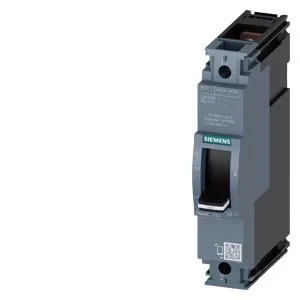
Siemens 3VA1110-6MH32-0JA0 Circuit Breaker, 70kA @ 415V, 100
MPN3VA1110-6MH32-0JA0
Siemens 3VA1 IEC frame 160, breaking capacity class H, Icu=70kA @ 415V, 3-pole, In=100A, starter protection TM120M, AM, shunt trip STL 110-127V DC/AC.
Source DocumentedChannel stated on listing & quote
Condition PhotosReal unit photos / video on request
WhatsApp AnswersFast human replies for machine-down parts
Worldwide DispatchDHL/FedEx — transit quoted per order
Independent China distributor & sourcing agent· Listing updated Sep 2026
Product details
Frequently asked questions
What is the breaking capacity of this breaker?
It has a breaking capacity class H with Icu = 70 kA at 415 V AC, meaning it can safely interrupt short-circuit faults up to that level.
Where can I buy 3VA1110-6MH32-0JA0?
This part is sourced and quoted to order against an RFQ through independent industrial-automation distribution; availability and current pricing are confirmed at quote time.
Does this breaker include overload protection?
No — the description states it is without overload protection; it is intended for starter protection where a separate overload relay handles the thermal overload function.
MPN
3VA1110-6MH32-0JA0