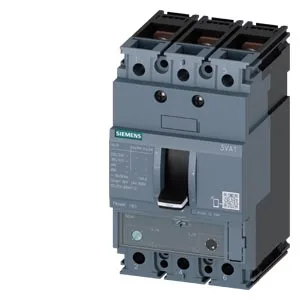
What this 3VA1 is — and the spec that decides fit
It carries a TM240 thermal-magnetic overcurrent release, rated 40 A continuous at 40 °C and derated to 37 A at 70 °C — the thermal curve matters if your enclosure runs hot. The interrupting ratings are the headline: 187 kA at 240 V, 121 kA at 415 V, 75.6 kA at 440 V, and 17 kA at 500 V and 690 V. That 76.2 mm width (3 inches) is a standard 3-pole MCCB footprint — it fits Siemens 3VA1 panelboards and switchboards without adapters. Max power loss is 13.3 W at rated load, which is modest for a 40 A frame; ventilation in a sealed enclosure is still advisable if you're stacking breakers.
Mounts in a standard 3-pole MCCB cutout. The UVR coil draws continuously when the control voltage is present; verify your control transformer can supply the inrush without dropping below the dropout threshold. That covers most indoor panel environments. The TM240 release is fixed thermal-magnetic — no electronic adjustment, no zone-selective interlocking. Set it and forget it, but coordination studies need to account for the fixed curve.