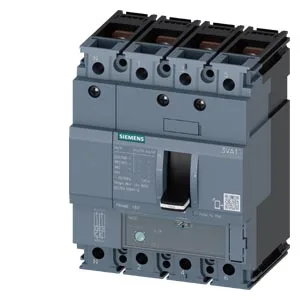
SENTRON 3VA1140-5GE42-0AA0 — 40 A MCCB with TM220 Release
This is a line-protection design — meaning it's built for feeder and distribution circuits, not motor-starting duty — and it carries a 187 kA interrupting capacity at 240 V AC, which drops to 121 kA at 415 V and 75.6 kA at 440 V. That kind of SCCR headroom matters when you're coordinating downstream branch breakers in a high-fault panel. It's set at 40 A from the factory, and the thermal element compensates across ambient temperature: full 40 A up to 50 °C, then a gentle derating to 37 A at 70 °C. For a panel builder, that means no field calibration, but also no flexibility if the load changes. Dimensions are 70 mm deep by 101.6 mm wide by 130 mm tall — a standard footprint for a 4-pole frame in this class.
The 187 kA at 240 V is the headline number, but the real-world selectivity picture is at 415 V (121 kA) and 440 V (75.6 kA).
The 101.6 mm width (4 inches) for a 4-pole breaker is compact — it fits in a 600 mm wide enclosure with room for metering and a disconnect on the same row. Power loss is 10.8 W maximum at rated load, so thermal rise inside a sealed enclosure is manageable; no forced ventilation required for a single unit.