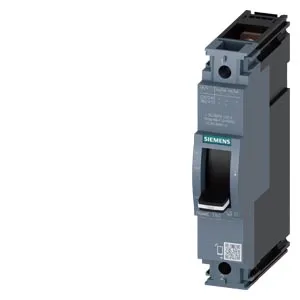
The 3VA1180-4ED32-0AA0-ZD00 is a 3-pole IEC frame 160 circuit breaker from the Siemens 3VA1 line, configured for line protection with a fixed thermal-magnetic TM210 trip unit. Overload protection is fixed at Ir=80A (equal to the In rating), and short-circuit protection is fixed at Ii=10 x In, so the magnetic trip threshold is 800A. This is a fixed-setting breaker; no adjustment dials for Ir or Ii are present on the TM210 unit. The nut keeper kit and DC Power OEM designation in the description indicate this variant was configured for a specific OEM assembly in China — the nut keeper retains the mounting hardware during panel vibration or transport. For a replacement or BOM fill, confirm the physical footprint matches the existing DIN-rail or panel-mount cutout; the 3VA1 frame 160 occupies a standard 3-pole width on the rail.
A substitution to a standard 3VA1 breaker with the same frame, poles, and trip unit would require verifying the nut keeper kit and any OEM-specific markings are acceptable to the end customer or inspector.
Deployment context
The 36kA SCCR at 415V means it can be installed at a service entrance or sub-distribution point where the available fault current reaches that level, provided the upstream device (transformer or main breaker) has a higher or equal rating. The fixed trip settings simplify commissioning — no dials to verify — but also mean the breaker is dedicated to a specific load current; any change in load requires swapping the breaker, not adjusting it.