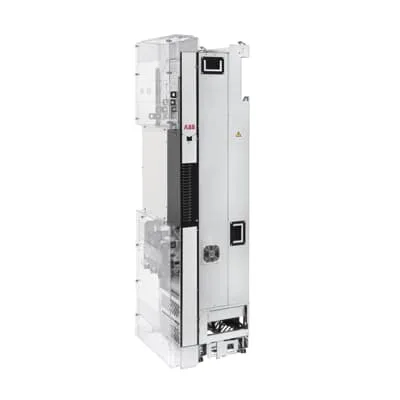
The light-overload rating sits at 618 A (IlD) with the same 355 kW power as normal use, which gives a bit of headroom for occasional peaks without stepping up a frame size. Standby loss is 207 W, and full-load power consumption hits 11039 W at rated output. The efficiency level is IE2, and note that regenerative drives are exempt from EU ecodesign energy efficiency data requirements (Regulation EU/2019/1781, §2.3.c) — so don't expect an IE4 or IE5 label here; the energy recovery is the efficiency story. Operating temperature maxes at +55 °C, humidity 5–95% non-condensing, and altitude up to 4000 m — that's useful if the cabinet sits in a warm plant or at elevation. Sound level is 75 dB(A), so ear protection near the panel is worth planning for.
Sourcing and integration notes
This module includes the control unit, so it's a self-contained regenerative drive — no separate controller card to order. Communication is via CAN; there's no onboard Industrial Ethernet, so if you need PROFINET or EtherNet/IP, plan for an optional fieldbus adapter. Analog I/O: 2 inputs, 2 outputs. Digital I/O: 6 inputs, 2 outputs. The battery information lists two CR2032 lithium coin cells (220 mAh, 3 V) — these back the real-time clock and parameter storage; they'll need replacement every few years in service. Lead time and pricing depend on configuration and quantity, so send the BOM line for a quote. It's a current-production ABB part, so factory lead times apply.