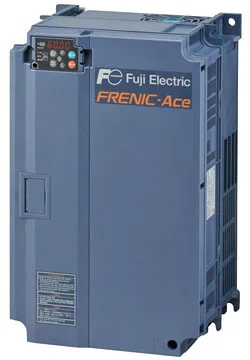
The FRN0085G2S-4GU is a 50 hp variable-frequency drive from the FRENIC-Eco series, rated for 72 A continuous output at 460 VAC three-phase. That 72 A figure is the key number for motor matching: a 50 hp, 460 V induction motor at full load typically draws around 65 A, so this drive gives you about 10% headroom for overload or ambient derating. Input range is 380-480 VAC +10%/-15%, which covers the common 400 V and 480 V global line voltages without a transformer tap. Output frequency spans 0.1 to 120 Hz, so it handles both standard 50/60 Hz motors and higher-speed applications like spindle or pump over-speed. Starting torque is 50% at 1 Hz — enough for a loaded centrifugal pump or fan to break away without a separate torque boost setting.
Protection and compliance — what's built in
The drive includes a full protection suite: drive and motor thermal overload, overvoltage, undervoltage, phase failure, phase-to-phase and phase-to-ground short circuit, and over-braking detection. That means you can skip an external motor overload relay for most single-motor installations — the drive's i²t model handles it. Dynamic braking is built in (no separate chopper needed), though the brake resistor is external. Safety listings include UL508C (power conversion equipment), CSA C22.2 No.14, and EN50178-1997 (electronic equipment for power installations). The EN50178 standard is the European predecessor to IEC 61800-5-1, so the drive is accepted in both North American and EU panel builds.
Enclosure and mounting — panel integration notes
The drive ships as an open (chassis) type with a NEMA 1 enclosure — meaning it's suitable for indoor, non-condensing environments but needs a clean, dry panel location. Dimensions are 21-3/4 in high by 12-5/8 in wide by 10 in deep. That's a full-size frame; plan for adequate clearance above and below for airflow, and account for the heat sink fins on the back plate.
I/O and control — what you get on the terminals
Control I/O includes 7 digital inputs, 3 analog inputs, 5 digital outputs, and 2 analog outputs. That's enough for basic speed reference (potentiometer or 0-10 V), start/stop via dry contact, and a fault relay output. The analog inputs accept both voltage and current signals, configurable per input. No Ethernet port on this base model — communication is via the keypad or remote contact closure. An LCD/LED display shows output frequency, current, voltage, motor speed, alarm codes, and function parameters.