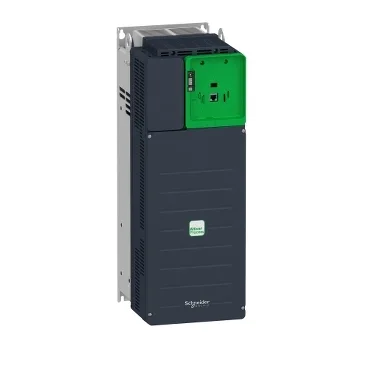
Drive specs and signal reality
The ATV930D37N4Z is a 37 kW normal-duty / 30 kW heavy-duty variable speed drive from the Altivar Process ATV900 family, built for 380-480 V three-phase supplies. Its 74.5 A continuous output at 4 kHz switching (normal duty) and 61.5 A heavy duty give you clean headroom for standard 37 kW induction or synchronous motors, as long as the mounting position stays within ±10° of vertical and the ambient stays below the listed derating curve. The integrated EMC filter keeps conducted emissions within IEC 61800-3 without an external plate, and the THDI stays under 48% from 80-100% load per IEC 61000-3-12 – meaning less harmonic noise on the line than many drives in this class. Noise from the fan runs 71.5 dB; if that matters for a quiet corner of a plant, factor in enclosure or remote mounting.
Certifications on file include UL 508C, IEC 61800-3 (EMC), IEC 61800-5-1 (safety), IEC 61508 and IEC 13849-1 for functional safety, plus pollution degree 2 and overvoltage category III. The documentation package covers the compliance paperwork most plants require.
Mounting and environment check
Cabinet mount, IP21 – so it's for indoor, clean-ish panels. The heat sink dissipates 240 m³/h cooling airflow. Keep the altitude under 1000 m for full rating; above that, derate by 1% per 100 m up to 4800 m. Vibration at 1 gn from 13-200 Hz and shock at 15 gn for 11 ms are solid for most industrial floors, but if you're mounting it on a shaker, bolt through the mounting feet properly. Network options: Modbus TCP, Modbus serial, and EtherNet/IP are on the base board. Slot A accepts Profibus DP V1, PROFINET, DeviceNet, EtherCAT, or CANopen modules – pick the option module that matches your control bus. Wires for the control screw terminals accept 0.5-1.5 mm², which covers most signal and digital input runs. The digital inputs need an external 24 V DC supply (19-30 V). Internal 10.5 V DC drives the reference potentiometer, and a separate internal 24 V DC (21-27 V) feeds the digital inputs and STO safety function. Separate the supply rails – noisy shared supplies are the first thing I'd check if the drive throws a fault on power-up.