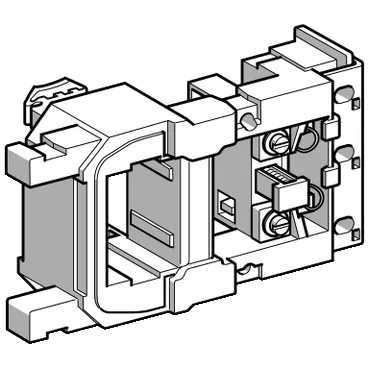
Schneider Electric LX0FH060 — Contactor & Starter Coils

Schneider LX0FH060 TeSys F Contactor Coil, 230/110 V AC/DC

MPNLX0FH060
Active

Schneider Electric TeSys F contactor coil, LX0FH060, 230/110 V AC/DC control circuit, 50-100 ms unlatching time.

StockContact for availability
Lead timeIn Stock wk
MOQ1 pcs
Sourced new & surplus through independent channelsAuthenticity-screened · ESD-safe packingListing updated Jul 2026
How we verify every order →

Specifications

Identification

LX0FH060 — Identification
ParameterValue
Product typeContactor coil
Product rangeTeSys
Device short nameLX0FH

Electrical

LX0FH060 — Electrical
ParameterValue
Control circuit voltage [Uc]230 V AC/DC 40...400 Hz 110 V AC/DC 40...400 Hz
Control circuit typeAC/DC at 40...400 Hz
Control circuit voltage limitsLatching: 0.85...1.1 Uc Unlatching: 0.85...1.1 Uc
Coil resistance (avg.)29.65 Ohm latching at 20 °C 576 Ohm unlatching at 20 °C

Performance & Durability

LX0FH060 — Performance & Durability
ParameterValue
Operating time50...100 ms unlatching 45...50 ms latching
Max. operating rate120 cyc/h 40 °C
Mechanical durability1 Mcycles

Product details

What this coil is and what it drives

The LX0FH060 is a replacement or spare coil for the TeSys F contactor range, designed to pull in and hold the contactor's main power poles. It accepts dual control voltages — 230 V AC/DC or 110 V AC/DC — across 40 to 400 Hz, so it covers both 50 Hz and 60 Hz line supplies without a separate tap change.

Timing and pull-in margins

Unlatching (opening the main contacts) takes 50 to 100 ms; latching (closing) takes 45 to 50 ms. That spread matters when coordinating with upstream protection or sequencing multiple contactors — the unlatching window is wider, so expect a slightly longer arc-extinction time on dropout. The coil holds reliably between 0.85 and 1.1 times the rated control voltage for both latching and unlatching. If your control bus sags below 85 % of nominal, the contactor may drop out or fail to pick up — check your supply regulation against that margin.

Duty cycle and mechanical life

That's typical for a general-purpose contactor coil — fine for conveyor starts, pump cycling, or HVAC compressor runs. If your application exceeds 120 ops/h, the coil temperature will climb and you'll need to derate or step up to a larger frame.

Coil resistance — a diagnostic number

The latching winding measures 29.65 Ω at 20 °C; the unlatching winding measures 576 Ω at 20 °C. If you're troubleshooting a contactor that won't hold in, a resistance check against these values tells you whether the coil is open, shorted, or within spec before you pull the contactor out of the panel.

Frequently asked questions

What control voltages does the LX0FH060 accept?

It accepts 230 V AC/DC and 110 V AC/DC, both at 40 to 400 Hz. That covers standard 50 Hz and 60 Hz line supplies without modification.

What is the operating time of this coil?

Unlatching takes 50 to 100 ms; latching takes 45 to 50 ms. The wider unlatching window reflects the time needed to extinguish the arc on dropout.

What is the mechanical durability of the LX0FH060?

Rated for 1 million mechanical cycles at a maximum operating rate of 120 cycles per hour at 40 °C.

MPN
LX0FH060