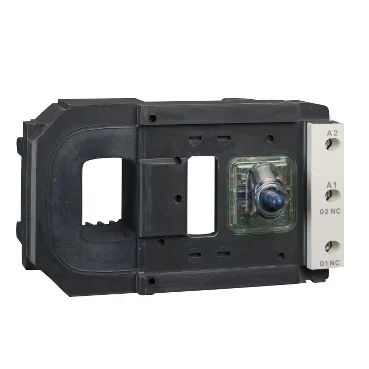
The LX9FK938 is a specific contactor coil from the TeSys F range, designed for 440...560 V DC low consumption control circuits. It is the replacement coil for TeSys F contactors, not a complete contactor assembly. Rated for control circuits at 500 V AC 50/60 Hz and 500 V DC, it operates across AC 40...400 Hz and DC low consumption control types. The coil draws an inrush power of 470 W at 68 °F (20 °C), with an average inrush resistance of 448 Ohm and a holding resistance of 3750 Ohm at the same temperature. Switching times are 60 ms opening and 20 ms closing, which defines the contactor's response in motor start/stop sequences. The coil has no built-in suppressor module, so external suppression (RC snubber or varistor) must be added if driving from a PLC output or solid-state relay to protect against voltage spikes.
Mechanical durability of 10 Mcycles means the coil itself is rated for 10 million mechanical operations before end-of-life — this is the coil's own life, not the contactor's electrical endurance under load. In high-cycle applications like conveyor sortation or press feeders, this rating ensures the coil won't fail before the contactor's main contacts need replacement. Heat dissipation of 15...18.3 W must be accounted for in panel thermal calculations. In a densely packed enclosure with multiple TeSys F contactors running continuously, this heat adds up and can reduce the ambient temperature margin. The coil is rated for ambient air operation from 23...131 °F (-5...55 °C). Maximum operating rate of 3600 cycles/hour at 158 °F (70 °C) sets the duty cycle limit. At lower ambient temperatures the rate can be higher, but this is the guaranteed maximum at the upper end of the temperature range. If your application exceeds 1 cycle per second continuously, the coil will overheat. Control circuit voltage limits are operational 0.85...1.1 Uc at 131 °F (55 °C) and drop-out 0.3...0.5 Uc at the same temperature. This means the coil will pick up reliably at 85% of nominal voltage (425 V for a 500 V coil) and will drop out when voltage falls below 50% (250 V). In weak grid conditions or long cable runs, verify the voltage at the coil terminals stays above the pick-up threshold.