What it is and what it does
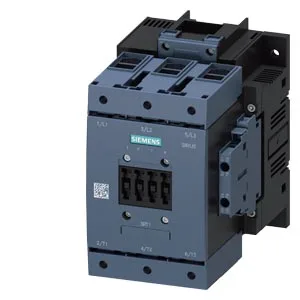
The Siemens 3RT1055-7AB36 is a SIRIUS power contactor, Size S6, designed for switching motor loads in industrial control panels. It accepts main power conductors from 16 to 70 mm² stranded, and auxiliary terminals handle solid or stranded wire from 0.5 to 4 mm². The coil operates on a 23–26 V range with screw-type terminals, pulling in within 40–60 ms on AC or DC.
Key ratings and what they mean for fit
AC-3 duty (motor starting) is the rating that governs real-world use: the contactor is rated for 750 switching operations per hour at AC-3 maximum, which means it can handle frequent motor starts on conveyors, pumps, or fans without overheating the contacts. AC-4 (plugging/inching) drops to 130 ops/h — a hard limit for reversing or jogging applications. Mechanical life is 10 million operations typical, so the contactor will outlast most panel rebuild cycles if the electrical load stays within curve. Auxiliary contact ratings are given per voltage: 10 A at 24 V, 2 A at 48 V, 1 A at 110 V, 0.3 A at 220 V. That 24 V figure is the one to watch for PLC-driven control circuits — it confirms the aux can switch a typical 24 VDC relay load without derating. Arcing time runs 10–15 ms, which is in the normal range for a contactor this size. The coil hold-in is 0.8 power factor at 50/60 Hz, so the control transformer supplying the coil should be sized for that inrush.
Where it fits in the panel
Mounting is screw fixing onto a vertical surface, with ±90° rotation and ±22.5° tilt allowed. Clearance requirements: 10 mm upwards, 10 mm downwards, 10 mm to the side, and 20 mm forwards. The 170 mm depth is the dimension that matters for gland plate clearance and door swing — check that against your enclosure depth before committing the BOM line. Operating temperature range is -25 to +60 °C, storage -55 to +80 °C. That -25 °C lower limit means it's fine for unheated plant rooms in temperate climates, but if the panel sees -30 °C ambient, you'll need a heater or a different coil option.
