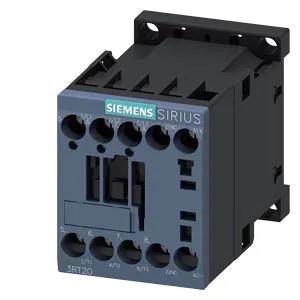
The coil pulls 24 VDC nominal, and at that rated voltage the main contacts carry 10 A. That 10 A figure is the operational current at 24 V, not the AC motor rating; for AC-3 duty (squirrel-cage motors, start/run) the mechanical life is rated at 30 million operations typical, and the maximum switching frequency sits at 750 cycles per hour. The screw-type terminals on the magnet coil accept solid or stranded wire from 0.5 mm² up to 4 mm², and double-wiring is supported: two conductors of 0.5–1.5 mm², 0.75–2.5 mm², or a single 4 mm² per clamp. That covers the common panel-wire gauges without needing bootlace ferrules, though stranded with ferrules is cleaner on a live swap. An auxiliary switch is built into this order code variant — the "-0CC0" suffix flags that.
Mounting and clearances — what the panel builder needs
Those numbers govern the DIN-rail pitch and the enclosure depth. That 6 mm side gap is tighter than the verticals — if you're stacking contactors side-by-side on the rail, the 6 mm is the minimum; any less and heat dissipation or arc-flash clearance gets pinched. Storage range is wider at -55 to +80 °C, which matters if the spare sits in an unheated warehouse.
Switching frequencies and arcing — what the duty cycle means
The maximum switching frequency depends on the load type: AC-1 (resistive) allows 1 000 cycles per hour; AC-2 and AC-3 (motor start/run) both cap at 750 cycles per hour; AC-4 (plugging, inching, reversing) drops to 250 cycles per hour. The AC-3e rating also sits at 750 cycles per hour. These numbers govern how fast the contactor can cycle without overheating the coil or welding the main contacts — a conveyor line jogging at 300 cycles per hour is well inside the margin; a rapid-reversing application at 600 cycles per hour pushes toward the AC-4 limit and needs the lower 250 figure respected. That 7–13 ms window is the interval the control logic must account for when sequencing contactors — if you're interlocking two contactors for motor reversal, the break-before-make gap is at least that 7 ms minimum, plus the arc time.