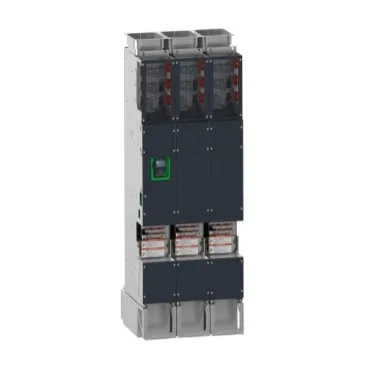
Drive summary
The ATV9A0C50N6: Switching frequency is adjustable from 2 to 4.9 kHz, but above 2 kHz you'll need to derate current—the datasheet curve is the guide, not the nameplate. Forced convection cooling, so don't skimp on airflow in the panel.
Lifecycle status is listed as current. That means Schneider is still building it, no last-time buy looming. We can quote this drive against an RFQ with standard lead times; no panic to stockpile. Standards compliance covers IEC 61800-3 (EMC), IEC 61800-5-1 (safety), IEC 61000-3-12 (harmonics), and functional safety per IEC 61508 and IEC 13849-1. Marking is CE, so it's good for the European market out of the crate.
Integration notes
Cabinet mount only—IP00 behind the door, IP21 or IP54 with the right enclosure. Pollution degree 2, so clean-ish environments preferred. Electrical connections: control uses removable screw terminals 0.5–1.5 mm² (AWG 20–16), line side screw terminal, motor terminals are M10 bars. That's beefy enough for 484 A. For altitude, you can go to 2000 m with no derating; above that, start ratcheting current down per the curve in the manual. Vibration resistance is 0.5 gn at 13–200 Hz, so no special isolation needed for normal plant floors. Potential choices for communication: Slot A accepts Profibus DP V1, PROFINET, DeviceNet, EtherCAT, CANopen (RJ45, SUB-D 9, or screw terminals). Slot B and C can take I/O or relay extension modules. For Modbus serial it's 2-wire RS485 at 4.8–38.4 kbps, with RTU frame and up to 247 addresses. Ethernet ports do 10/100 Mbit/s with half/full duplex and auto-negotiation for IP or Modbus TCP.