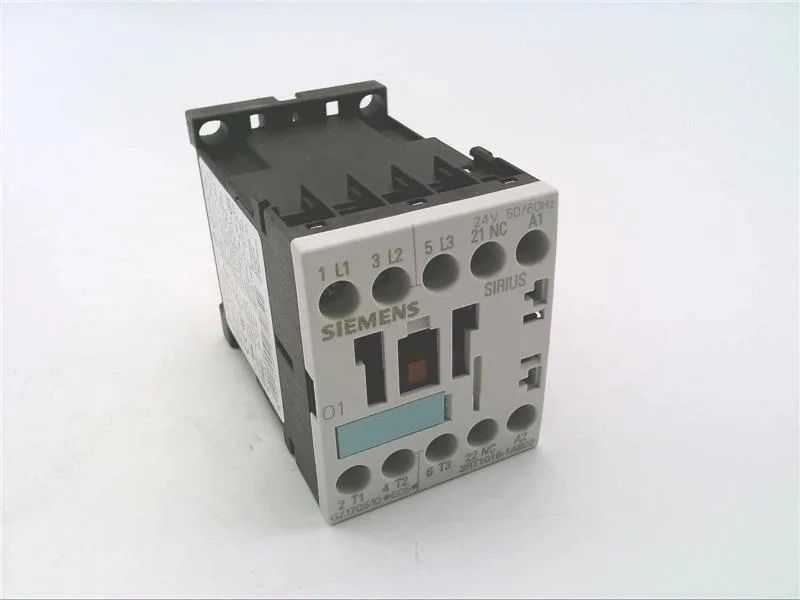
The coil pulls in at 24 VDC, and the contactor carries an AC-4 rated operating current of 8.5 A at 400 V for reversing or inching duty, and 10 A under AC-12 for resistive loads. For AC-2 and AC-3 duty at 400 V, it handles motor loads up to 4 kW.
Mounting and wiring — panel builder notes
Dimensions are 45 mm wide × 60 mm high × 73 mm deep. The 73 mm depth is the critical dimension for enclosure depth — check that your gland plate or back panel leaves clearance for the spring-loaded terminals and any wiring ducts. Main circuit connections use spring-loaded terminals accepting 2x (0.25 to 2.5 mm²) solid or stranded wire, or 2x (24 to 14 AWG). Front and terminal protection is IP20 — finger-safe but not sealed. Keep this contactor inside a cabinet rated IP54 or better if the environment has airborne dust or washdown. It is not rated for open-panel mounting in dusty areas.
For Type 2 coordination (contactor remains operational after a fault), use a gL/gG 20 A fuse. This is critical for specifying the motor branch circuit — pick the coordination type based on whether you can tolerate downtime for contactor replacement. The contactor also switches DC loads: rated 10 A at 24 V, 2 A at 60 V, 1 A at 110 V, and 0.3 A at 220 V. These are resistive DC ratings; inductive DC loads will need a diode or RC snubber across the load.